Posted on

The Top 7 Reasons Why Creatine Should Be In Your Routine

Creatine isn’t just for elite athletes. Nearly everyone can benefit from creatine supplementation, whether you’re an athlete, weekend warrior, a college student, or a professional. On top of that, it’s one of the most researched, effective, and safe supplements in the world. And while most people know creatine for muscle and strength, science shows its benefits reach far beyond the gym.

Here are 7 research-backed reasons why creatine deserves a place in your daily routine.


1. Fuels Brain Energy

Your brain uses nearly 20% of the body’s energy every day. Creatine boosts ATP production in neurons, improving energy availability and helping you stay sharp during mentally demanding tasks.

📖 Rae et al., Oral Creatine Monohydrate Supplementation Improves Brain Performance, 270 Proc. Royal Soc’y B 2147 (2003).


2. Enhances Cognitive Performance

Creatine has been shown to improve working memory, reasoning, and reaction time — especially under stress. Students, professionals, and anyone in high-pressure environments can benefit from clearer, faster thinking.

📖 McMorris et al., Creatine Supplementation and Cognitive Performance in Elderly Individuals, 23 Neuropsychology 535 (2009).


3. Combats Sleep Deprivation

Running on little sleep? Creatine has been shown to improve mood, alertness, and reaction time during sleep loss. That makes it a game-changer for shift workers, military personnel, parents, and anyone burning the candle at both ends.

📖 McMorris et al., Creatine Supplementation and Cognitive Performance During Sleep Deprivation in Humans, 24 Psychopharmacology 1 (2006).


4. Improves Mental Health

Creatine helps regulate brain energy balance, which plays a role in mood. Clinical research suggests creatine may improve outcomes when combined with antidepressant therapy and may help reduce depressive symptoms.

📖 Roitman et al., Adjunctive Creatine for Major Depressive Disorder: A Proof-of-Concept Study, 200 J. Clin. Psychiatry 728 (2007).


5. Protects the Brain as We Age

Early research shows creatine may support brain cell survival and protect against age-related decline. It’s being studied for potential roles in Alzheimer’s, Parkinson’s, and other neurodegenerative conditions — making it more than just a sports supplement.

📖 Beal, Neuroprotective Effects of Creatine, 98 Amino Acids 1509 (2011).


6. Increases Strength and Power

Creatine is best known for boosting ATP in muscles, which allows for greater strength, speed, and endurance in high-intensity exercise. Athletes across all sports see measurable performance gains with creatine.

📖 Rawson & Volek, Creatine Supplementation and Resistance Training: A Meta-Analysis, 13 J. Strength & Conditioning Res. 198 (1999).


7. Builds Muscle

By helping you train harder and increasing muscle cell hydration, creatine supports lean muscle growth. It’s a proven tool not just for physique goals but also for health and function as you age.

📖 Candow et al., Effects of Different Frequencies of Creatine Supplementation on Muscle Size and Strength in Young Adults, 18 J. Strength & Conditioning Res. 639 (2004).


Who should be cautious with creatine

While there are hundreds of studies supporting the safety and efficacy of creatine, there are some specific populations where very little to no research has been done. Therefore, we suggest exercising caution and talking with your physician about creatine supplementation if you are in one of these groups:

  • Pregnant women
  • Lactating mothers
  • Children under 18
  • People with pre-existing kidney disease

We hope that more research emerges about how creatine affects these groups so that we can have a fuller picture of its benefits and risks for everyone in all phases of life.


The NorthStar difference

We are committed to your lifelong health journey. That’s why our creatine monohydrate is pure and free of additives, fillers, sweeteners, or flavors. You can trust that NorthStar only gives you what you need, and nothing you don’t.
Posted on

Will Creatine Make Me Gain Weight?

If you’ve been in the fitness world for any amount of time, you’ve probably heard of creatine. Creatine is a naturally occurring compound widely used as a supplement among all ranges of athletes, from your casual gym goer to bodybuilders to professional athletes.

Creatine is one of the most researched and widely used supplements in the fitness world. The scientific literature shows that creatine enhances athletic performance, improves muscle strength, and decreases recovery times. It’s also been shown to have positive benefits for our cognitive health, such as increased memory and cognitive performance, protection against neurodegenerative diseases, better moods, helping to reduce the effects of sleep deprivation, and even possibly improving symptoms of depression. 

However, a common concern among the creatine-curious is weight gain due to creatine supplementation. So, let’s break down this concern and explore why the clinically studied benefits of creatine outweigh the potential side effects.

What is Creatine?

Creatine is a naturally occurring compound found in small amounts in foods like red meat and fish and is also produced by the body. It’s stored in the muscles and used as a quick energy source for high-intensity, short-duration activities like weightlifting, sprinting, and jumping. Taking a creatine supplement on a regular basis helps to maximize these benefits, increasing the body’s ability to regenerate ATP (adenosine triphosphate), the primary energy source for fast muscle contractions. 

Creatine’s benefits extend far beyond gym-goers. Research shows that creatine plays a crucial role in brain health, cognitive function, and overall energy production, making it valuable for people of all ages and lifestyles. It has been linked to improved memory, mental clarity, and reduced mental fatigue, especially in individuals who do not get enough from their diet, such as vegetarians. Additionally, creatine has neuroprotective properties that may help slow cognitive decline in aging populations and support overall brain resilience. Beyond cognitive benefits, creatine also aids in cellular energy production, which can enhance daily energy levels and combat general fatigue, making it useful for anyone looking to improve their mental and physical well-being—not just those focused on fitness.

The common concern: water retention

Creatine works by drawing water into your muscles, which can increase intracellular water content. When you first begin creatine supplementation, some individuals may notice a slight increase in total body weight. However, most of this weight gain is due to water retention in the muscle cells. The average water weight gain is usually between 2-4 lbs and happens within the first few days of starting creatine supplementation.

Why the benefits are worth it

People with weight loss goals may consider this a reason not to take creatine altogether. We’ve already outlined the multitude of creatine’s benefits above, but there are even benefits to the water weight itself: 

  1. Enhanced Muscle Definition: The few extra pounds of water accumulate inside muscle cells, not the fat cells, giving the muscles a fuller, more volumized appearance. If you already have a bit of muscle definition, the fuller muscle tissue can enhance that.
  2. Muscle Strength & Performance: The added water in muscle cells can also improve muscular endurance and overall performance during workouts by keeping your muscles hydrated and allowing for better nutrient transport, essential for muscle growth and recovery.
  3. Body Composition: Reliable body composition measuring devices (such as imaging like a DEXA scan, air/water displacement like the Bod Pod, or bioelectrical impedance like the InBody) will register the water as fat-free mass, not fat. 
  4. Proven Safety: Creatine is one of the safest supplements on the market. For most people, the benefits far outweigh any minor concerns about weight gain.

What to look for in a creatine supplement

There are a lot of different forms of creatine on the market. By a long shot, the most research has been published about creatine monohydrate. Creatine monohydrate is also cheaper than other forms, such as creatine hydrochloride, creatine citrate, and creatine malate. Look for a creatine monohydrate that is pure and unflavored, with no additives. If you love gummies or flavored creatine, by all means, take them, but also know that they usually include sugar and/or artificial sweeteners and other additives and will also be more expensive. 

You should supplement with creatine daily, so we don’t recommend taking a non-daily supplement (like pre-workout) combined with creatine. It doesn’t matter what time of day you take it, so long as supplementation is consistent. An average of 5 grams per day is generally recommended. 

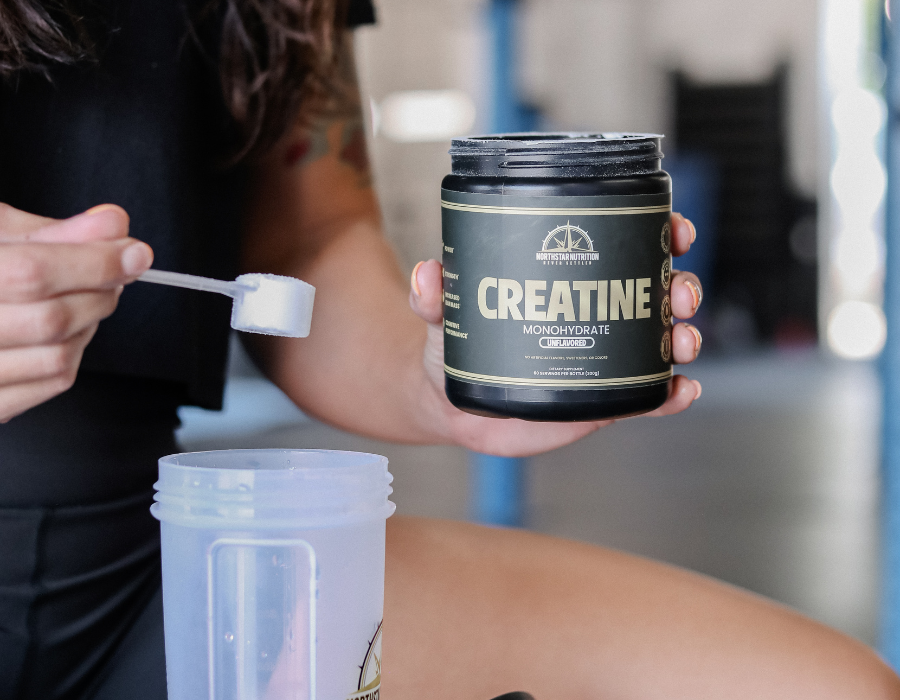
Our creatine monohydrate has zero added ingredients, has no taste, and can easily be mixed with water or any other beverage. 

For the best supplements on the market, you can trust NorthStar Nutrition for clean, transparent, effective, clinically studied products with no artificial junk to aid you on your health and fitness journey.